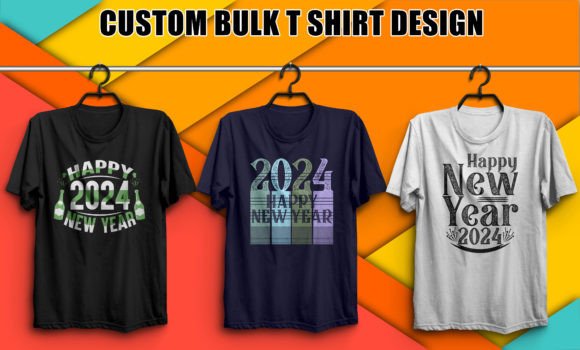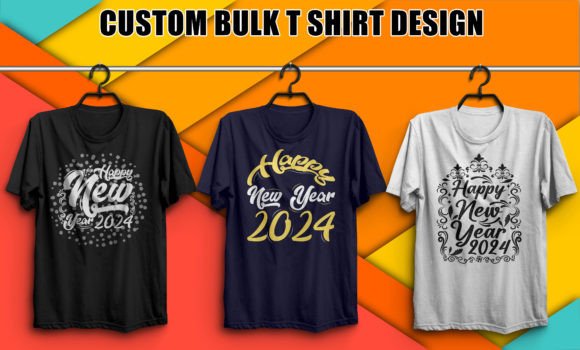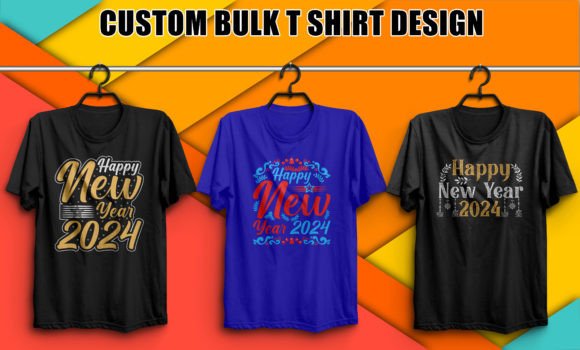
Reviewing Happy New Year Vector Tshirt for Embroidery
As a designer who spends more time staring at stitch simulations than actual fabric, I have learned that not every graphic translates well to thread. When I first pulled up the Happy New Year Vector Tshirt file, my initial reaction was cautious optimism. The vector lines were clean, suggesting a modern aesthetic, but the real test is always in the translation from screen to hoop. This isn’t just about whether it looks good on a monitor; it is about how it holds up under the needle, how it feels against the skin, and whether it will survive the wash cycle of a busy household.
In this review, I am evaluating this design through the lens of practical application. I am not looking at it as a static image, but as a potential machine embroidery design ready for production. Whether you are an Etsy seller preparing for the holiday rush or a hobbyist making personalized gifts, understanding the structural integrity of your design assets is crucial before you commit to stitching.
First Impressions and Visual Personality
The mood of the Happy New Year Vector Tshirt is celebratory yet restrained. It avoids the chaotic clutter often seen in holiday graphics, opting instead for a balanced layout that allows the typography to breathe. For embroidery, this is a significant advantage. Overly complex backgrounds often lead to excessive stitch density, which can cause puckering on lighter fabrics. The visual personality here suggests versatility. It feels appropriate for a wide range of demographics, from young adults looking for trendy custom apparel to families wanting matching outfits for New Year’s Eve parties.
The shape and detail level appear manageable. There are no microscopic elements that would require ultra-fine needles or risk breaking thread frequently. This makes it a strong candidate for both home machines and multi-needle commercial setups. The design does not rely solely on intricate satin stitch borders, which can be prone to snagging, but seems to utilize a mix of fill and running stitches to create depth without bulk.
Real-World Application Scenarios
To truly judge a design, you must imagine it in context. I recently worked on a project involving a batch of custom tote bags for a local boutique. While the product title suggests a focus on tees, I tested the concept on a heavy canvas tote bag design. The result was promising. The bold lines of the vector art held their clarity even on the textured surface of the canvas. However, for a softer application, consider sweatshirt embroidery. The plush texture of fleece can sometimes swallow small details, but the substantial weight of the lettering in this design ensures it remains legible and impactful.
For those running a craft business, this design offers excellent potential for holiday embroidery collections. It works well on structured items like caps, where the curvature requires a design that is not too wide or dense. An embroidered patch featuring this motif could also serve as a versatile add-on product, allowing customers to customize their own jackets or bags post-purchase. Even in the realm of baby embroidery, if scaled down appropriately and stitched with soft threads, it could adorn a keepsake blanket or a milestone outfit, provided the stitch count is adjusted to remain gentle on delicate skin.
Technical Considerations for Stitching
While the aesthetic is strong, technical execution is where many projects fail. When working with the Happy New Year Vector Tshirt concept, pay close attention to thread colors. High contrast is key. If you are stitching on dark fabric, ensure your thread choice pops without looking garish. Metallic threads can enhance the festive theme, but they are notoriously difficult to work with in high-density areas. I recommend testing a sample with standard polyester thread first to check for tension issues before attempting specialty threads.
Fabric texture plays a massive role in the final outcome. On smooth cotton or poly-blend t-shirts, the design should lay flat and crisp. However, on stretchy fabrics like jersey knits, proper stabilization is non-negotiable. Use a cut-away stabilizer for garments that will be washed frequently to prevent the design from distorting over time. For woven fabrics like linen or canvas used in aprons or pillow covers, a tear-away stabilizer might suffice, but always test on scrap fabric first.
Be wary of curved surfaces. If you plan to use this on a cap, the center front panel is the only safe zone. The side panels will distort the vector shapes, making the text unreadable. Similarly, avoid placing large, dense fills on thin fabrics without a backing, as the pull of the threads can cause unsightly puckering that ruins the finished product.
Commercial Viability and Brand Consistency
For small shop products and digital sellers, consistency is brand currency. This design lends itself well to a cohesive collection. You can create printable mockup previews that show the design on various items, helping customers visualize the end result. This increases buyer engagement and trust. A professional-looking digital embroidery file presentation can significantly boost conversion rates for online listings.
However, before listing any items, verify the licensing terms. Just because a design is labeled for T-Shirt Designs does not automatically grant commercial rights for all applications. Confirm whether the license covers physical goods, digital resale, or both. Protecting your craft business from legal issues is as important as the quality of your stitching. Ensure that your use of the design aligns with the creator’s terms to maintain professionalism and avoid copyright strikes.
Practical Designer Notes
- Test on Scrap Fabric: Never stitch a new design directly on your final garment. Always run a test on similar material to check for registration errors and thread breaks.
- Check Stitch Density: If the design feels too stiff after stitching, consider using software to reduce the density slightly, especially for items that need to drape softly.
- Contrast Matters: View your design in black and white. If the details disappear, you may need to adjust thread colors or simplify the background elements.
- Hoop Size Compatibility: Ensure the design fits within your standard hoop sizes. If it requires a large hoop, consider splitting it or resizing it for smaller applications like pockets or cuffs.
- Wash Testing: Wash and dry your test sample multiple times. Check for thread fraying, color bleeding, or fabric distortion. This step is vital for maintaining customer trust in your handmade product quality.
In conclusion, the Happy New Year Vector Tshirt design offers a solid foundation for festive embroidery projects. Its clean lines and balanced composition make it adaptable for various embroidery project types, from casual wear to decorative home goods. By paying attention to technical details like stabilization, thread choice, and fabric compatibility, you can elevate this design from a simple graphic to a high-value personalized gift or best-selling inventory item. Approach it with a critical eye, test thoroughly, and let the quality of your craftsmanship speak for itself.