Christmas Puppy 3D Shadow Box: A Branding Review
As a brand designer who has spent the last decade helping local businesses find their visual voice, I approach every new graphic design asset with a critical eye. It is not enough for an image to be cute; it must serve a strategic purpose within a broader brand identity. Recently, I evaluated the Christmas Puppy 3D Shadow Box for a potential seasonal campaign involving a boutique pet bakery and a handmade candle shop. My goal was to determine if this asset could elevate small business branding or if it would merely add noise to an already crowded marketplace.
First Impressions and Brand Mood
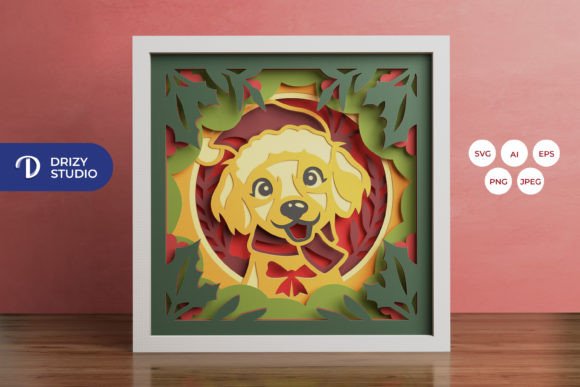
The immediate impact of the Christmas Puppy 3D Shadow Box is one of warmth and nostalgic charm. Unlike flat, two-dimensional clipart, the 3D effect creates depth, suggesting a tactile quality that resonates well with consumers seeking authenticity. This design asset feels distinctly friendly, festive, and decorative. It does not scream luxury minimalism, nor does it fit a stark, corporate aesthetic. Instead, it aligns perfectly with brands that prioritize emotional connection, community, and handmade craftsmanship.
For a local business such as a family-owned florist or a artisanal cookie shop, this mood is invaluable. It signals approachability. When I placed the asset against a soft cream background, it evoked feelings of home and holiday tradition. However, when tested against a high-contrast black backdrop, the shadows lost some definition, reminding me that context is everything in professional branding.
Strategic Applications in Packaging and Print
The true test of any design element is its versatility across various mediums. I explored how the Christmas Puppy 3D Shadow Box could function in real-world scenarios beyond simple social media posts. For packaging design, this asset shines as a focal point on box lids or as a central motif on hang tags. Its dimensional look adds perceived value to the unboxing experience, making a simple cardboard box feel like a gift.
In terms of product label application, caution is required. While the detail is beautiful, it can become muddy if scaled down too small. I found it worked best on medium-to-large labels, such as those found on jam jars, candle tins, or tote bags. For smaller items like lip balm tubes or price tags, the intricate shadow details might disappear, reducing the visual impact. Therefore, I recommend using simplified versions or cropping the asset to highlight just the puppy’s face for smaller formats.
- Holiday Gift Sets: Use as a hero graphic on bundle packaging.
- Thank-You Cards: Adds a personal, festive touch to post-purchase inserts.
- Social Media Graphics: Ideal for Instagram stories announcing seasonal hours.
- Website Banners: Creates an immediate seasonal atmosphere for e-commerce sites.
Enhancing Visual Hierarchy and Trust
A common mistake in marketing visuals is clutter. The Christmas Puppy 3D Shadow Box helps combat this by providing a clear anchor point. In editorial design or flyer layouts, placing this illustration near the headline draws the eye immediately, establishing a strong visual hierarchy. This clarity builds customer trust; a polished, well-structured design suggests a professional operation, whereas a chaotic layout can imply carelessness.
When integrated into a logo design system, even temporarily for a seasonal sub-brand, it reinforces recognition. Customers begin to associate the playful puppy with the quality of the product. This emotional linkage is crucial for handmade business owners who rely on repeat customers and word-of-mouth referrals. The asset supports better shelf appeal by breaking the monotony of text-heavy packaging, inviting the consumer to pick up the product and examine it closer.
Where to Exercise Caution
While versatile, this asset is not a universal solution. It should be used carefully in formal corporate branding where seriousness and authority are paramount. Additionally, avoid placing it over busy patterns or low-contrast backgrounds, as the subtle 3D shading may vanish. For luxury minimalist brands, the playful nature of the puppy might clash with a sophisticated, understated aesthetic unless used ironically or in a very muted color palette.
Furthermore, never let the decoration compete with legal information or ingredient lists on a product label. Regulatory compliance must always take precedence over aesthetics. Ensure there is ample white space around the asset to let it breathe and maintain legibility of surrounding text.
Practical Designer Notes for Implementation
Before committing to a full rollout, I always run a series of technical checks. First, test the Christmas Puppy 3D Shadow Box on real product mockup templates. Digital screens display colors differently than ink on paper, so a physical proof is essential. Check the PNG design transparency to ensure no white halos appear around the edges when placed on colored backgrounds.
If you have access to the SVG design or vector file, inspect the editability. Can you change the colors to match your specific brand palette? Testing the asset beside various typography styles is also critical. I found it paired surprisingly well with bold sans serif fonts for a modern look, but also complemented handwritten script fonts for a rustic, cozy vibe. Avoid pairing it with overly ornate display fonts, which can create visual competition.
Finally, always confirm the commercial license terms. Using a digital product from a creative marketplace without proper clearance can lead to legal issues, especially for physical product sales. Ensure your usage rights cover both digital marketing and printed merchandise. By treating this clipart or illustration as a strategic component of your Canva template library or custom design suite, you maximize its ROI.
In conclusion, the Christmas Puppy 3D Shadow Box is a potent tool for local business owners looking to inject personality into their seasonal campaigns. When used with intention and technical precision, it transforms standard promotional visuals into memorable brand experiences. It bridges the gap between digital appeal and physical presence, making it a worthy addition to any designer’s toolkit for the holiday season.